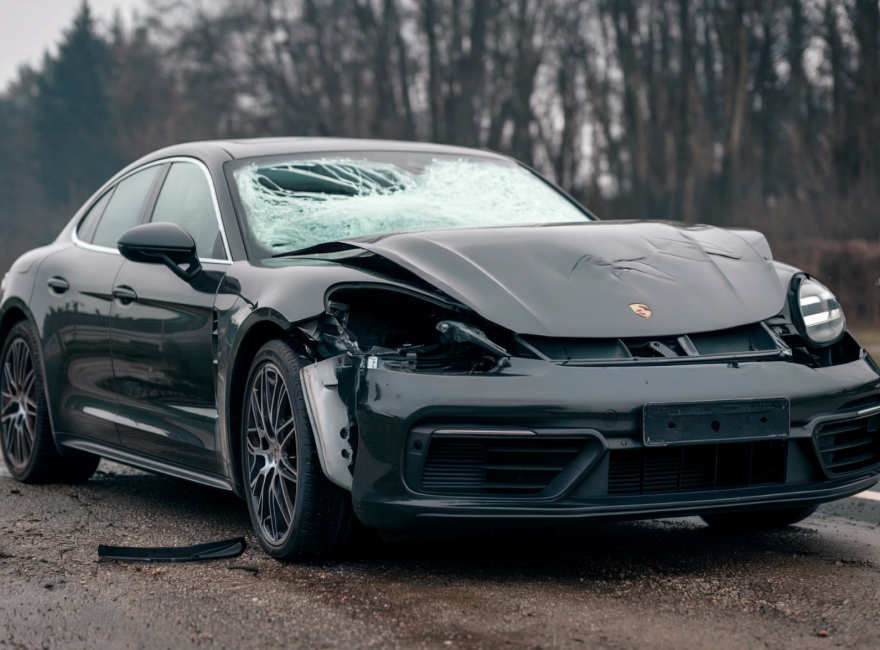

When your supercar is declared “totaled” by insurance but still runs well, the situation creates immediate questions about legality, safety, and financial recovery. At SupercarClaims, we regularly assist South Florida exotic car owners going through this exact scenario. Understanding what “totaled” actually means, and whether you can drive a totaled car, requires examining insurance thresholds, state title branding laws, and critical safety considerations.
Get a free claim review from our certified appraisers →
What Does “Totaled” Actually Mean? Understanding ACV and Total Loss Thresholds
A total loss declaration doesn’t indicate your vehicle is destroyed beyond repair. In insurance terminology, “totaled” simply means repair costs exceed the vehicle’s Actual Cash Value (ACV): its current market worth before the accident.
The total loss threshold varies significantly by state, but states use this basic formula:
Total Loss = Repair Costs ÷ ACV > State Threshold Percentage
For example, if your Lamborghini has an ACV of $200,000 but requires $160,000 in repairs, Florida’s 80% threshold would classify it as a total loss (160,000 ÷ 200,000 = 80%).
State Total Loss Thresholds:
- Florida: 80% of ACV
- Texas: 100% of ACV
- California: 75% of ACV
- New York: 75% of ACV
Key Definitions:
- Salvage Certificate: Official document issued when a vehicle is declared a total loss
- Rebuilt Inspection Requirement: Mandatory safety inspection before returning salvage vehicles to road use
- Owner-Retained Salvage (Buyback): Option allowing owners to purchase their totaled vehicle from the insurer
Speak with our Florida-based team about your total loss case →
Can You Legally Drive a Totaled Car If It Still Runs?
The critical distinction lies between the insurance decision and legal driving status. Once a salvage certificate is issued and your title is branded, you generally cannot drive the vehicle until you complete the rebuilding requirements and a state inspection.
Before Title Branding Occurs
In the period between total loss declaration and official title branding, legality depends on your vehicle’s current registration and insurance status. However, we strongly advise against driving during this transitional period due to:
- Potential safety risks from hidden damage
- Insurance coverage complications
- Liability exposure in subsequent incidents
After Salvage Title Branding
Florida law prohibits operating salvage-titled vehicles on public roads until they pass rebuilt inspection and receive a rebuilt title. Key state variations include:
- California: Requires a dismantler’s permit for any movement
- New York: Issues temporary permits for repair transport only
- Nevada: Allows limited operation with special permits
Florida-Specific Considerations
South Florida supercar owners face unique challenges given the state’s 80% total loss threshold and strict rebuilt title requirements. Florida mandates a comprehensive inspection covering frame integrity, safety systems, and emissions compliance before issuing rebuilt titles.
What Happens to My Title After a Total Loss? The Salvage to Rebuilt Process
Understanding title progression helps Florida owners plan their next steps:
Step 1: Insurance company reports total loss to Florida DMV within 10 days
Step 2: DMV issues a salvage certificate, invalidating the current registration
Step 3: Owner completes repairs using certified facilities
Step 4: Vehicle undergoes Florida rebuilt inspection covering:
- VIN verification and theft check
- Frame and structural integrity assessment
- All safety systems functionality
- Emissions compliance (Miami-Dade and Broward counties)
Step 5: Upon passing, DMV issues the rebuilt title and allows re-registration
Florida Timeline Considerations
Florida’s rebuilt inspection process typically requires 30-45 days once repairs are completed. Miami-Dade and Broward counties may extend timelines during peak season due to higher inspection volumes.
Get expert guidance on Florida’s rebuilt title process →
The Owner-Retained Salvage Decision: Buyback Mathematics for Florida Owners
Many South Florida supercar owners choose owner-retained salvage, purchasing their totaled vehicle from the insurance company. This decision requires careful financial analysis:
Buyback Calculation Example:
- Insurance settlement: $200,000 (ACV)
- Salvage buyback cost: $40,000 (typically 20-25% of ACV)
- Net insurance payout: $160,000
- Estimated repair costs: $120,000
- Total owner investment: $160,000 ($40,000 buyback + $120,000 repairs)
- Post-repair value: $140,000-$160,000 (accounting for rebuilt title stigma)
Florida Supercar Market Factors
South Florida’s robust exotic car market provides advantages for rebuilt supercars compared to other regions. However, expect 25-40% permanent value reduction due to rebuilt title status.
Critical Safety Considerations: Hidden Damage in Modern Supercars
Even drivable supercars may harbor dangerous hidden damage affecting:
- Advanced driver assistance systems (ADAS) requiring recalibration
- Carbon fiber components with internal stress fractures
- Electronic stability control sensors potentially compromised
- Airbag system integrity affecting occupant protection
We’ve documented cases where seemingly minor damage led to complete safety system failures months after repair. Professional inspection by certified exotic car specialists is non-negotiable.
Maximizing Your Insurance Recovery: Loss of Use and Diminished Value
Florida supercar owners have additional recovery options beyond standard total loss settlements:
Loss of Use Claims
Florida recognizes rental reimbursement and third-party loss of use claims, providing compensation for transportation during repair periods. For exotic vehicles requiring specialized facilities, daily loss of use can reach $300-500.
Diminished Value Considerations
While total loss eliminates traditional diminished value claims, owners choosing buyback may pursue diminished value for the rebuilt vehicle’s permanent value reduction.
Conclusion: Professional Guidance for Complex Decisions
When your car is totaled but still drivable, the intersection of insurance law, state regulations, and safety requirements demands expert assistance. A seemingly straightforward situation involves complex decisions affecting your financial recovery, legal compliance, and personal safety.
We recommend confirming your vehicle’s current title status, evaluating buyback mathematics specific to your situation, and verifying insurance ACV calculations before making irreversible decisions. For South Florida supercar owners, understanding state-specific requirements and market dynamics is essential for optimal outcomes.
Schedule your free consultation with our Florida-based team →
Whether you’re dealing with a total loss declaration, considering owner-retained salvage, or need guidance on rebuilt title requirements, our certified appraisers and top-rated legal team provide the expertise necessary for informed decision-making in Florida’s unique supercar market.