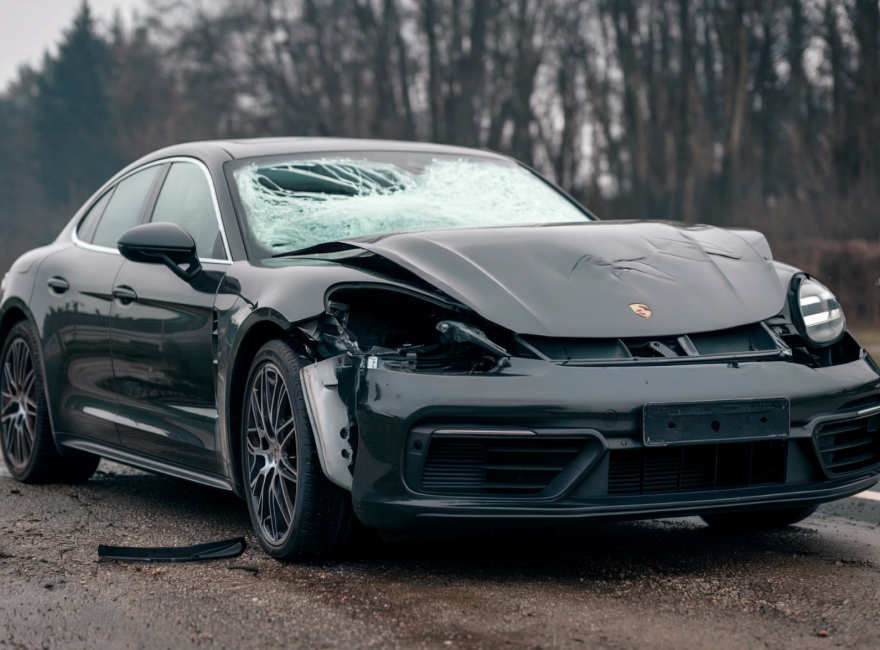

If you have had your vehicle repaired after an accident and received a surprisingly low payout, there is a good chance the insurer used the 17c formula to calculate diminished value.
The 17c formula is a three-step method that insurers use to estimate diminished value, which is the loss in resale value that your vehicle suffers simply because it now has an accident history, even after undergoing top-quality repairs.
The 17c formula originated from the 2001 Georgia case State Farm Mutual Automobile Insurance Co. v. Mabry, which allowed a simplified approach to estimating diminished value. It was crafted for that specific case and never adopted as a nationwide standard. Still, insurance companies across the United States adopted it because it is simple to apply and delivers predictable numbers. But for exotic, collector, or limited-production cars, it can fail to capture real-world market losses.
Breaking Down the 17c Diminished Value Calculation
Here is how the 17c formula estimates post-accident diminished value:
- Begin with 10 percent of the vehicle’s pre-loss value. This figure represents the maximum baseline reduction in the insurer’s formula (not a legal limit) and is often adjusted internally depending on the insurer’s guidelines.
- Apply a damage severity multiplier ranging from 0.00 to 1.00 (these ranges come from insurer conventions, not from statute or regulation). This reflects the extent of the damage:
- Minor cosmetic issues: approximately 0.25
- Moderate damage: approximately 0.50
- Major structural damage or airbag deployment: 0.75 to 1.00
- Apply a mileage multiplier ranging from 0.00 to 1.00. Lower mileage means a higher multiplier:
- Very low mileage: approximately 1.00
- Average mileage: approximately 0.60
- High mileage: approximately 0.30
The formula is: Pre-Loss Value × 10% × Damage Multiplier × Mileage Multiplier = Diminished Value
Example Calculation
Let’s say your exotic car was worth $150,000 before the accident:
- 10 percent cap = $15,000
- Damage multiplier = 0.75 (major structural damage)
- Mileage multiplier = 0.80 (low miles for the year)
Calculation: $15,000 × 0.75 × 0.80 = $9,000
That is the diminished value estimate using a standard 17c diminished value calculator. For an everyday car, it may roughly align with market expectations, but for a rare supercar, it tends to fall well short of actual resale losses.
How 17c Formula Usage Varies by State and Insurer
The 17c formula is not a legal requirement under federal or state law. Its use, and even whether you can claim diminished value at all, can differ based on your state and on whether the claim is first-party (your own insurer) or third-party (the at-fault driver’s insurer).
- Some states recognize it as one acceptable method for estimating diminished value.
- Others require independent market-based proofs, such as appraisals or comparable sales.
- In certain jurisdictions, courts have questioned the accuracy of the 17c formula or limited the weight given to it, especially when better market-based evidence is available for luxury, exotic, or limited-production vehicles.
Insurers often adjust the multipliers based on internal guidelines, which means even the same formula can yield different results depending on who is calculating it.
Why the 17c Formula Often Underestimates Supercar Values
For exotic, collector, or rare production models, the 17c formula overlooks crucial factors that impact resale prices.
What the 17c Formula Fails to Consider
- The 10 percent cap is arbitrary. Limited-run exotics can lose 15 to 30 percent or more in value post-accident, especially if buyers are wary of any damage history.
- Mileage can sometimes be effectively “double-counted.” Because your pre-loss value already reflects mileage, applying another mileage multiplier can exaggerate the reduction.
- The formula ignores market drivers such as rarity, provenance, and collector appeal. Factory options, build numbers, and ownership pedigree, which strongly influence resale, receive no consideration.
- It also overlooks real buyer behavior. Collectors and exotic car buyers often shy away entirely from any car with an accident record, regardless of repair quality.
What a 17c Diminished Value Calculator Is Useful For
A 17c diminished value calculator can be helpful in several ways:
- It helps you understand how the insurer arrived at its diminished value offer
- It reveals whether a formula-based method was used
- It provides a baseline figure for starting negotiations
But for high-performance or collectible cars, it is just that, a starting point. It does not reflect the true market impact of an accident on a rare vehicle.
Ways to Challenge a Low Offer
If the number seems too low, you have options. Here is how to assemble a more compelling case:
Gather Professional Documentation
Commission an independent appraisal. Select an appraiser well-versed in exotic and collector vehicles. They will evaluate accurate pre-loss value, scope and type of damage, and market-driven diminished value using real comparables.
Provide comparable sales. Locate listings or recent sales of an undamaged version of your exact car and a similar vehicle with a damage history. The price difference represents your real-world diminished value.
Emphasize Your Vehicle’s Unique Characteristics
Emphasize rarity and provenance. Include documentation showing limited production numbers, rare factory options, and verified service and ownership history.
Present detailed repair records and photos. Frame damage, repainting, or airbag deployment can all affect perceived value and buyers’ eagerness to pay top dollar.
These steps help transition your claim from formula-based to market-based, which better reflects what buyers actually pay for repaired exotics.
Common Questions About the 17c Diminished Value Formula
What is the 17c formula and how does it work?
It is a three-step process: take 10 percent of your vehicle’s pre-loss value, apply a damage multiplier, then a mileage multiplier. The output is a diminished value estimate.
Is the 17c formula required in every state?
No. Some states permit it, others do not acknowledge it at all. Always verify your local regulations or consult a diminished value specialist.
Can diminished value surpass 10 percent?
Absolutely. The 10 percent cap is merely part of the formula, not a legal ceiling. Market data and appraisals frequently show losses well beyond that.
Do all repaired vehicles lose value?
Most do, especially in the exotic and collector segments. Even flawless repairs cannot erase an accident history from a buyer’s mind.
How long do I have to file a diminished value claim?
It varies by state and by claim type (first-party vs. third-party). Most statutes of limitation on property damage claims run between 1 and 6 years. Acting promptly after repairs provides you stronger evidence and better outcomes.
Start With the Calculator, Then Get Proof
Make the 17c formula your starting point. Use a diminished value calculator to see how your insurer may have arrived at its number, then compare that result to what similar supercars with and without accident history are actually selling for.
If your payout looks low, this is where expert help matters. At SuperCarClaims.com, our in-house appraisers and attorneys who focus on high-value and exotic vehicles may review your documentation, prepare a professional diminished value appraisal, and build a demand package that reflects real market losses.
You can request a free consultation and claim review online or call us at (833) 822-2232 to find out whether your case justifies pushing back on the insurer’s offer. There is no upfront cost to get an opinion on your diminished value claim, and our team is only paid when we recover money for you.